Bark > Blog > Bowser's Boo Bash and the Halloween Treat Trap — What Those "Dog-Friendly" Cookies Actually Cost

Bowser's Boo Bash and the Halloween Treat Trap — What Those "Dog-Friendly" Cookies Actually Cost

Bowser's Boo Bash and the Halloween Treat Trap — What Those
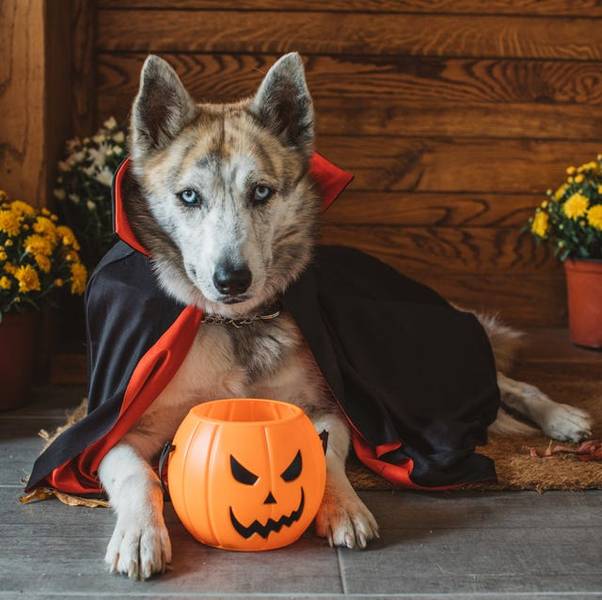
"Can I give him a cookie?" The woman at the Oregon Humane Society booth was holding a tray of pumpkin-shaped biscuits, each one frosted with orange icing and sprinkled with what looked like edible glitter. They were adorable. They were festive. They were, according to the handwritten sign, "all-natural, dog-friendly, and made with love." "Sure," I said, because I am a professional and because Murphy was doing his best "I am a sweet, neglected orphan" face, which is a lie, because he eats better than most humans I know. She handed him one. He inhaled it in three bites. Then he looked at her with those eyes, and she handed him another one. And then a third. By the time I intervened, Murphy had consumed three pumpkin cookies, a piece of "pupcake," and something called a "bark-brownie" that I am pretty sure was just a regular brownie with a dog bone pressed into the top. This was Bowser's Boo Bash, the Oregon Humane Society's annual Halloween fundraiser, held this year on October 24th at their new John's Landing location. It is the cutest event in Portland's pet calendar. Dogs in costumes. Photo booths with spooky backdrops. Vendors selling handmade treats. A costume contest where a pug dressed as a taco won first prize and I am still not over it. And, if you are not careful, a calorie bomb that can set your dog's weight management back by weeks. Here is the thing. I am not against fun. I am not against treats. I am not against dressing your dog in a vampire cape and taking 47 photos for Instagram. What I am against is the illusion that something labeled "dog-friendly" or "all-natural" or "made with love" is automatically healthy. Those are marketing words. They are not nutritional data. And the nutritional data on most Halloween-themed dog treats is genuinely frightening. I took samples home from the event. Not because I wanted to eat them — though I will admit, the peanut butter ones smelled pretty good — but because I wanted to analyze them. I weighed them. I looked up the ingredients. I calculated the approximate calorie content based on the macronutrient breakdown. And then I sat at my kitchen table with a cup of coffee and got angry.
🦴
Treat Calorie Calculator
Enter any Halloween treat and see exactly how many calories it packs. Compare it to your dog's daily needs before you say yes to the cute pumpkin cookie.
All data stays in your browser — we never see it.
The pumpkin cookie Murphy ate? It weighed 45 grams. Based on the ingredient list — oat flour, pumpkin puree, peanut butter, eggs, honey, coconut oil, and "natural coloring" — I estimated it at 180 calories. That is not a treat. That is a meal. For a 25-pound dog with a daily need of 800 calories, one cookie is 22.5% of their entire day's food. Murphy ate three of them. That is 540 calories in five minutes, from a stranger at a charity event, while I stood there holding his leash and thinking about how cute he looked in his bumblebee costume. The "pupcake" was worse. It was a mini cupcake, maybe 2 inches in diameter, with cream cheese frosting and a dog biscuit on top. I weighed it at 35 grams. Cream cheese is calorie-dense — about 100 calories per ounce. The cake portion was probably flour, eggs, and sugar substitute. My best estimate: 220 calories. For a 25-pound dog, that is 27.5% of their daily need. For a 15-pound dog, it is 44%. Almost half a day's food in one bite-sized cupcake. And the bark-brownie? That was the one that made me want to flip the table. It was a full-size brownie — not a mini, not a bite, a full brownie — with a milk bone pressed into the frosting. I estimated it at 350 calories. That is more than Murphy's breakfast. That is more than some small dogs eat in an entire day. And it was being handed out for free to any dog who walked by with a hopeful expression. I made a table. I want you to look at it. I want you to print it out and tape it to your fridge before October 24th.
TreatEstimated Calories% of Daily Need (15 lb dog)% of Daily Need (30 lb dog)% of Daily Need (70 lb dog)
Decorated pumpkin cookie (1)18036%22.5%15%
Mini pupcake with frosting22044%27.5%18.3%
Bark-brownie (full size)35070%43.8%29.2%
Peanut butter ghost treat (1)12024%15%10%
"Grain-free" pumpkin bite (1)9018%11.3%7.5%
Total if your dog gets one of each960192%120%80%
Read that last row again. If a 15-pound dog gets one of each treat at Bowser's Boo Bash, they have consumed nearly twice their daily calorie need. In treats. Before their actual dinner. That is not a fun day out. That is a metabolic disaster, and it is happening to hundreds of dogs at events like this across the country every single October. I talked to the vendor who made the pupcakes. She was lovely. She genuinely cared about dogs. She used organic ingredients. She avoided xylitol, chocolate, and raisins — the big three toxic foods. But when I asked her how many calories were in each one, she looked at me blankly. "I never really thought about it," she said. "They are just treats." "They are not just treats," I said, probably more sharply than I intended. "For a small dog, that pupcake is half their daily food." She looked horrified. And then she asked me to help her calculate the calories for her entire product line. We spent 45 minutes going through her recipes, weighing ingredients, and doing the math. By the end, she had decided to make a mini version — half the size, half the calories — and to display the calorie count on her sign. "I had no idea," she kept saying. "I really had no idea." That is the problem. The people making these treats are not evil. The people handing them out are not trying to hurt your dog. They just do not know. And because the treats are cute, and festive, and "dog-friendly," owners assume they are harmless. They are not harmless. They are concentrated calories wrapped in seasonal packaging, and your dog has no ability to say no.
⚖️
Food Calorie Comparison
Compare the calorie density of Halloween treats against regular kibble. See how one decorated cookie stacks up against a full cup of dog food.
All data stays in your browser — we never see it.
So what do you do? You do not skip Bowser's Boo Bash. It is a great event. It raises money for a great cause. It is fun. But you go in with a plan, the same way you go into a grocery store with a list so you do not come home with three bags of chips. My plan for this year: I am bringing my own treats. Small, low-calorie training treats that I know are 3 calories each. I will bring 20 of them. That is 60 calories total — less than one-third of one pumpkin cookie. When someone offers Murphy a treat, I will say, "Thank you, but he has allergies" — which is technically true, because Murphy is allergic to gaining weight — and I will give him one of mine instead. He does not care what the treat looks like. He cares that it came from me and that it tastes like chicken. I am also setting a hard limit: three treats from outside sources, maximum. And they have to be small. No full-size brownies. No frosted pupcakes. No cookies bigger than a quarter. If it does not fit in my closed fist, Murphy does not eat it. That is my rule, and I am sticking to it even if the vendor is giving me puppy eyes. Dr. Chen told me something that stuck with me after last year's event. "The dogs who get sick at these things," she said, "are almost always the small ones. Because the treats are sized for big dogs, and the owners do not adjust." A 15-pound dog eating a 350-calorie brownie is the equivalent of a 150-pound human eating a 3,500-calorie cake. Your stomach would hurt. Your dog's stomach hurts too. They just cannot tell you.
🔢
Dog Calorie Calculator
Know your dog's exact daily calorie budget before you walk into the treat carnival. Enter their weight and activity level to get their number.
All data stays in your browser — we never see it.
I also want to talk about the costume contest for a second, because this is where things get really tricky. The costume contest at Bowser's Boo Bash has prizes. People want their dogs to look good. And a lot of owners use treats to keep the dog still for photos, to get them to pose, to bribe them into wearing the ridiculous outfit. I saw one woman feed her French bulldog six treats in five minutes just to get one photo where he was not trying to remove his hot dog costume. Six treats. That dog probably ate 300 calories for a single Instagram post. If you are entering the costume contest — and I am not saying you should not, because the taco pug was genuinely hilarious — bring low-calorie rewards. Use praise. Use toys. Use belly rubs. Save the treats for when the camera is actually out, and then use tiny ones. Your dog does not need a full cookie to sit still for three seconds. They need a crumb. They need your voice. They need the positive association, not the calorie load. Here is my final thought, and then I will let you go plan your October 24th. The Halloween season is six weeks long if you count all the events, the parties, the trick-or-treaters who want to give your dog a "treat" from their bucket, and the leftover candy that somehow ends up on the floor. If your dog goes to three events and gets "just one treat" at each one, and each treat is 150 calories, that is 450 extra calories per week. Over six weeks, that is 2,700 calories. Almost a pound of fat. On top of the fall exercise drop I wrote about last week. On top of the shorter days and the rainy walks. It adds up. It always adds up. And the only way to stop it is to know the numbers before you walk into the party.
How many calories are in a typical Halloween dog treat?

Most decorated cookies and pupcakes at pet events contain 150 to 350 calories each. A mini cupcake with frosting can pack 220 calories, while a full-size "bark-brownie" may reach 350 calories. For a 25-pound dog, one treat can equal 20 to 45% of their daily need.

Are "all-natural" and "grain-free" Halloween treats healthier?

"All-natural" and "grain-free" describe ingredient sourcing, not calorie content. A grain-free cookie made with almond flour, coconut oil, and peanut butter can be just as calorie-dense — or more so — than a conventional treat. Always check portion size and calculate calories, not just marketing claims.

How do I say no to treat-givers at dog events?

Be polite but firm. "Thank you, but he is on a restricted diet" works. Some owners use a bandana or tag that says "Do Not Feed." Remember: your dog's health matters more than a stranger's momentary disappointment. Practice saying no before you go.

What are safe low-calorie alternatives for event treats?

Bring your own training treats — 3 to 5 calories each. Baby carrots (4 calories), green beans (2 calories), or small pieces of plain cooked chicken (10 calories) are excellent alternatives. Your dog cares about the interaction, not the extravagance.

Can one day of Halloween treats really hurt my dog?

One day will not cause lasting damage, but digestive upset is common — vomiting, diarrhea, lethargy. The real risk is the cumulative effect over the entire season. Three events with three treats each can add 2,700 calories over six weeks, translating to nearly a pound of fat gain. Murphy and Scout will be at Bowser's Boo Bash this year. Murphy in his bumblebee costume, which he tolerates because he is a golden retriever and they tolerate everything. Scout will be at home, because Scout believes Halloween is a conspiracy against dogs with sensitive souls. I will have my treat bag. I will have my calorie knowledge. And I will have the satisfaction of knowing that Murphy's waistline will survive the season intact.
Megan O'Connor

Megan O'Connor

Certified Pet Nutrition Consultant

Megan spent 6 years managing a busy Portland veterinary clinic before becoming a full-time pet nutrition consultant. She started dogcalorietool.org after watching hundreds of well-meaning owners accidentally overfeed their dogs. Murphy (golden retriever, 7) and Scout (terrier mix, 4) are her daily reminders that even experts make feeding mistakes.

📍 Portland, Oregon

Read full bio →